INTRODUCTION

This is foreseen to be an occasional blog relating to bird ringing at Abbotsbury Swannery. The site has operated as a BTO Constant Effort Site since 1995 and has taken part in the BTO Swallow Roost Project. In recent years we have concentrated in the autumn with both Yellow and Pied/White Wagtails. In 2009 we joined the Woodcock Network.

Wednesday, 13 November 2013

A five star morning!

A morning session today proved to be very rewarding.  A slow start and then it took off big time. A lovely variety of Redpolls were trapped in the reeds.  Good reason for not taking in the wagtail nets yesterday!


This was followed by the surprise of the morning when four Bearded Tits were found in the same net run.  There had been no sounds heard from these birds all morning and certainly no typical 'pinging' as they moved about the reeds. Obviously they were in a stealth mode!


Also trapped were several Cetti's Warblers as they moved about the Swannery.  October and November often sees good numbers of these birds as they move through the area.

A few more Chiffchaffs and Goldcrests were trapped and the last bird of the morning lived true to yesterdays suggestion.

A Siskin was extracted from the bottom shelf in the centre net of the withy bed- right above a small puddle of fresh water!


The weekend looks good so hopefully a few more calm mornings to follow.  Whether they will live up to this morning remains to be seen!

Tuesday, 12 November 2013

A change in the weather..

A week off and today saw a pleasant break from the misery which has continued for some while.  A lovely calm day so perfect for a ringing session!  The reeds are very quiet this time of the year.  Even the Pied Wagtails become harder to trap as they move from the outer fringes to a warmer and safer location in the centre of the reedbed.  This means that you can't get at them usually but this evening they were watched till they dropped down. There is a chance that a net can be repositioned!

Just prior to the sun disappearing over the beach a short inspection was made of the lagoon edge of the site and I flushed a small group, well about ten, Reed Buntings.  Next time I will be ready for them. The net is in position for them.  Reed Buntings never roost in big numbers here some some reason.

The nets in the reeds at Helen's Hide today caught just Cetti's Warblers and a single Wren. After this week they will be taken down until Yellow Wagtail time again next year.  In the withy bed though things were a little busier with a gentle flow of Chiffchaffs, Goldcrests and Wrens. 

A delightful Wren

Spiders eye view of a Goldcrest!

Chiffchaff

On the last net round a Goldfinch was found in the bottom shelf- I suspect dropping down for an evening drink in the small puddle of fresh water under the net.  Siskins have done this on previous visits.


With more calm weather forecast on and off this week it looks promising for a few more visits.  Finally what better way to end a glorious day than to have two Marsh Harriers soar right over your head as you furl the nets!

Wednesday, 16 October 2013

The yellow mist has disappeared...

With the Yellow Wagtails now well on their way to West Africa attention  has moved to the Pied Wagtail roost.  Numbers slowly increase as the Yellow Wagtails disappear.  By the end of the last week the roost had reached about 80 birds and this should slowly increase until the winter really sets in and the birds move inland to a warmer place to spend the night.  A couple of years ago  we traced them in the roost at the Co-op in Bridport.

Male Pied Wagtails are very smart birds- as are all black and white birds.


The head pattern varies considerably but the adult male above has a particularly interesting appearance.  This week the weights of birds also started to show a gain and many birds were carrying fat scores of 30 and 40 suggesting perhaps that they do not intend to stay. 

Other black and white birds trapped included a small party of Long-tailed Tits returning through the withy bed to roost.  Chiffchaffs are still dribbling through in small numbers


Last night in perfect conditions  25 wagtails were ringed from the roost.  Windy weather looks like it will curtail activities for the next few days. 

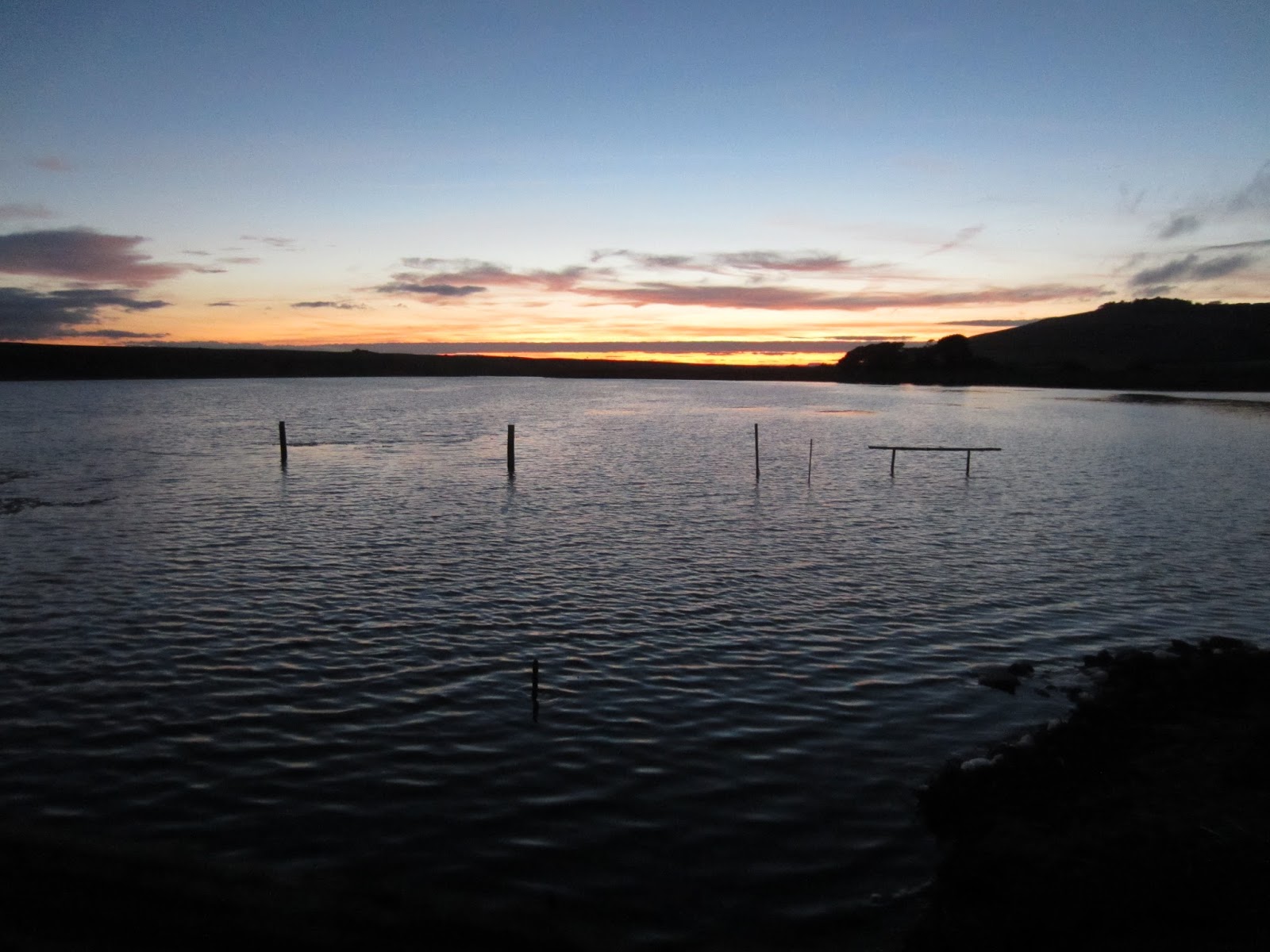
Finally a couple of pictures from the ringing hut last night of a beautiful calm evening at the West Fleet.


With the wagtails safely extracted attention was turned to the setting sun. 


Please look out for the colour ringed wagtails.  There are no prizes but it is interesting to see where they are.  With luck the harbour roost will appear again soon.  After the big harbour rebuild this year it will be interesting to see if the birds have found a new place to roost.

Friday, 27 September 2013

Bit of a catch up.....

The Yellow Wagtail roost has just about dribbled to a stop although earlier this week about 25 birds dropped in just on dark but only half a dozen were trapped and ringed.  It doesn't look as if we will get our 600 birds but we must not complain with 583.  We hope now that some of the colour ringed birds will be sighted in places far and wide.  White Wagtails though in the nets are always welcome.  These are also colour ringed as part of the long term study.


The other morning we decided to go for a sunrise and get away from the wagtail and vivid sunset theme.  The nets were up just on first light and the first bird we caught was a ....... wagtail.  A Grey Wagtail though.


Meadow Pipits soon started to drop in. These are actually very attractive birds in the hand.  Never tire of handling  Meadow Pipits and also the chance of an exotic pipit.


In the withy bed usual fare turned up including Blackcap and Garden Warbler.  The first Garden Warbler of the year   It was photographed in the ringing hut so it  looks a little strange.


The winds look to be getting in the way over the next few days but we can finish with the sunrise that greeted us that morning..


Makes you feel good to be out of bed!

Wednesday, 18 September 2013

Still on a run.......

As we had hoped for, the last couple of sessions have provided the more interesting and challenging birds- as they did last year.  A greater number of  'flava' type wagtails as we call them and a really good 'thunbergi' type. See Lukes blog for the picture of the latter.. Each bird is examined very closely as we look  for clues and colouring around the head and nape. The eye stripe is also given close attention. For some reason 'thunbergi' types  are often bigger looking birds with longer wings and heavier weights.


This evening though we drew a blank. No Yellow Wagtails were caught and the roost was only about 20 birds.  We did catch a few Swallows  and a 1st year male Reed Bunting.  The Yellow Wagtail total is now 563 birds.  Perhaps hoping to round things off at 600 will be too much to ask for.  The weather looks better at the weekend so maybe there will be a slight window for us.


This evening as the sun set in the West the full moon was rising in the East. A spectacular sight from Helen's Hide. You can stay in glued to the television or you can be out taking in the splendour of the natural world.

Moon rising over Cuckoo Coppice

There can be no competition surely!

Wednesday, 11 September 2013

Everything is OK!

Yellow Wagtail ringing has continued this past few days.  Luckily the wind has not been too much of a problem. Of interest we are getting more adults in with this late flush of birds.

Darvic ringing continues


Last night the roost was about 60 birds and they came in just at the point of sundown after a few anxious moments as to whether we were going to catch any.


Megan processing her first 'alba' wagtail.  The pied/alba roost is about 30 strong at the moment but they are reluctant to mix with the Yellow Wagtails.  All the wagtails pre-roost on the tern island and then split as they head to the reeds.

Some more Yellow Wag pictures


The running total has not been worked out yet but we are hoping for a few more evenings before the birds have gone for another year.

Again the sunsets on the Fleet have been spellbinding.


With calling Common Sandpipers skimming over the water, returning  Geese and Swans coming into land and the wind in the reeds it is often very hard to leave this place!


Friday, 6 September 2013

Four hundred and counting.....

We are now at 400 Yellow Wagtails this autumn.  Hopefully the weather next week will be kind and the birds will still be hanging about and we might reach 500.  It is not a numbers game but we are keen to get as many darvics on the birds as possible this season. Interestingly towards the end of last season we started picking up the most challenging birds at this time of the year.  These are the ones which we are after.

Already this year we have identified several 'flavas'- below is a picture of one taken by Luke earlier last week.

'flava' wag taken by Luke last week.

Adult birds are a bonus and often take some sorting as the feather fringes are not always that clear cut.

 Male Yellow Wagtail  'flavissima'
 

You can never have enough Yellow Wagtails!


They are a challenging group but by having the chance of such a large roost here hopefully we can make some sense of it or at least throw open some ideas.  

There is nowhere on earth quite like the Fleet- well we like to think that- and the sunsets there are fantastic